Design + Decor
Indoor-Outdoor Living in the Northeast
The resurgence of connected open spaces
Story by Sean Jarvis
Design + Decor
The resurgence of connected open spaces
Story by Sean Jarvis
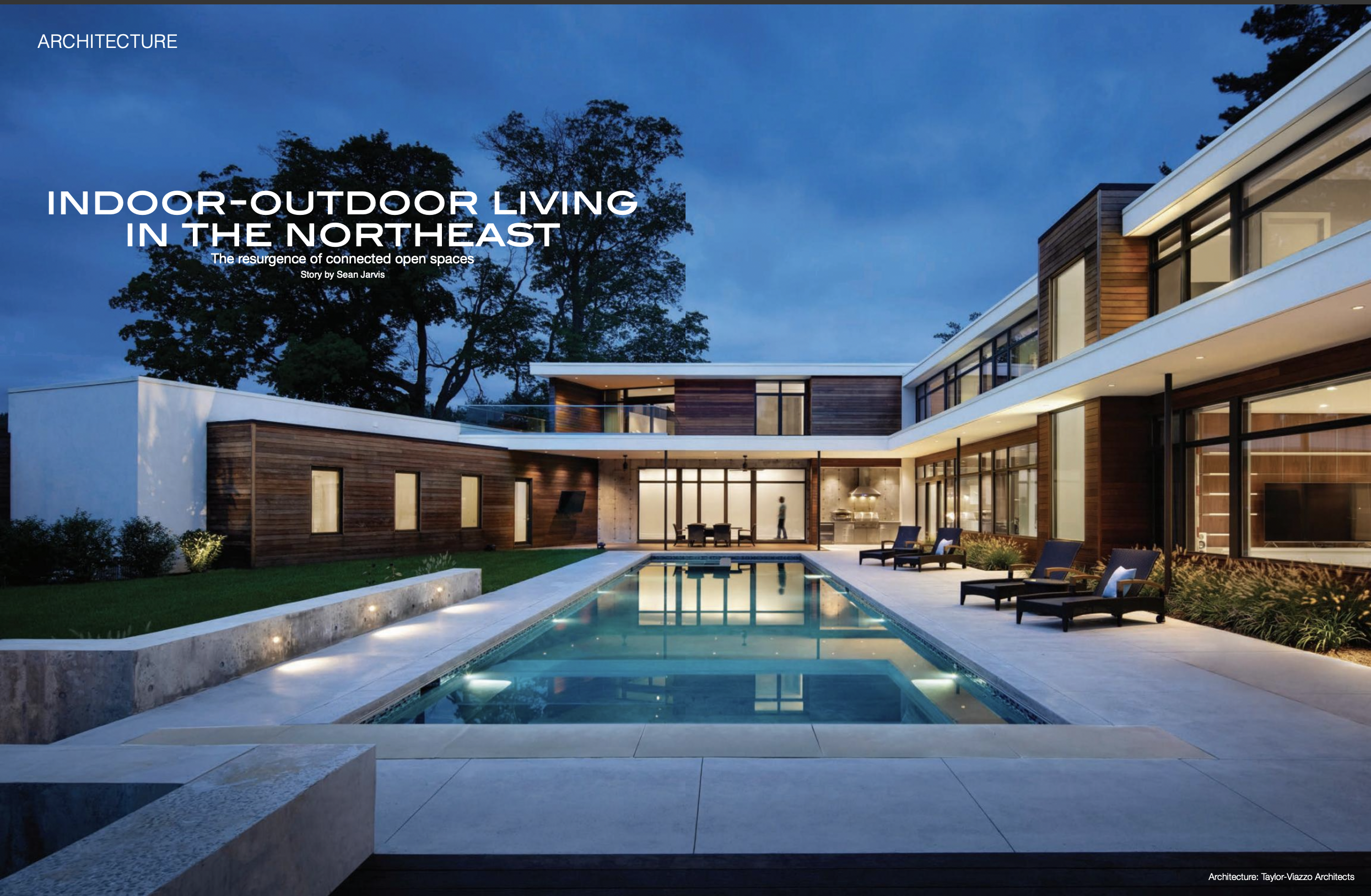
As stay-at-home orders continue and our ability to travel is at a stand-still, the desire to get back in touch with nature is stronger than ever. Where we once spent most of our days at the office, we are now gazing outside the windows of our homes and appreciating what lies just beyond the glass. Architects all over the Northeast have noticed that the desire for a more seamless indoor-outdoor integration is on the rise and are meeting this resurgence with enthusiasm. Architect Bruce Beinfield says, "As the country continues to get more and more urbanized, the relationship between people and the natural environment keeps getting reduced. There's a natural inclination to want to reinforce that connection to the outside world." Through this connection, we can step back from our work and recharge, breaking down walls and opening up our homes.
The East Coast is known for its extreme weather swings, not just throughout the year but also within the confines of a single day. These weather patterns add to the challenge of creating indoor-outdoor spaces, and with that in mind, the question is, "How do you create an outdoor space that can withstand the varied northeast weather?" According to architect Jason Viazzo, the answer is, "It's difficult; it's very difficult. Nature is constantly trying to tear down everything we build, whether its solar radiation hitting surfaces and gradually degrading them or the process of expansion and contraction from wide swings in temperature fluctuation." With these obstacles at the forefront, there have been many breakthroughs in design, materials, and technology to help homeowners and architects bridge the gap between the indoors and outdoors. Whether it be triple-paned glass doors, recessed infrared heating systems, or advances in building materials to help extend longevity, there are several ways to mitigate exposure to the elements and create comfortable living spaces. "Real design maximizes a potential. It does not have to be done for more money; it just requires more thought. That problem solving, that questioning of ‘what am I doing here? What does this site offer me? What are the unique things that this client wants to make their life better, and how do we do that? How do we exceed that?’” Asking these questions has resulted in innovative advances that have leveled the playing field when constructing homes for clients who have desires that used to only be achievable in warmer climates.
Many clients seek a Pinterest-worthy experience, often finding inspiration in West Coast architecture and seemingly unaware of the challenges builders face when emulating those designs on the East Coast. Considering the erratic temperatures, biting mosquitos, and sometimes long winter season, there are several different techniques and materials that can be used. In creating a finished product that will survive with as minimal maintenance as possible, Jason recommends, "Paying attention to the details. Using high-quality materials and things that are resistant to decay. For flooring, making sure that you have good drainage, so water doesn't sit on surfaces." Even still, he notes, "There is going to be maintenance, there is very little you can do about that, and you are going to have to keep it up for this to last. To build something that survives the elements is much harder than not." Fortunately, people want the ability to enjoy being outdoors as much as possible. “Homes are built to shelter us from extreme weather, and if we can, if we are comfortable, humans prefer to be outside, to be under the sun, under the stars, to be in nature."
In an effort to make it as comfortable as possible, one trend that is on the rise are pools that feature an automated retractable roof. Architect Carol Kurth is well-versed in creating seamless transitions between indoor living and outdoor enjoyment, and the finesse needed to make two spaces feel as one. With her Five Star House, the roof over the pool consists of thick glass panels that slide one over another, opening up the room on beautiful days and enclosing it in a protective bubble when needed. "Connecting with an indoor-outdoor lifestyle is not just about being outside; it's also about bringing the outside in through the use of windows, plants, and other features."
Many architects agree with Bruce when he mentions, "In terms of indoor-outdoor living, especially where there are potential views of a more natural environment, that's where we are seeing more use of glass. To really open up the inside to the outside and to bring the natural world in." Along with large windows, sliding doors that minimize the indoor-outdoor distinction are often requested. Architect Michael Smith utilizes large garage doors and lift and slide doors, which open wide to big spaces, though he is mindful of the drawbacks. "In the Northeast, you are limited in terms of the time of year you can enjoy outdoor spaces, so to help with that, we will install infrared heaters in the ceiling, which helps extend the season by a few months." Northeast architects are paying special attention to the technology and materials that will allow them to maximize the amount of time their clients can spend outdoors, whether that’s using infrared heaters, large fireplaces which sit as the focal point for outdoor patios, or retractable screens to keep mosquitos at bay.
Architect Chris Pagliaro adds, "Opportunity exists and it's our job to find it and our job to be responsible for it. It's not about saying, ‘Let's put a window here,’ it's ‘I don't want a wall here’; it's a little different kind of a conversation. Nature exists all around us, and people want to feel happiness and optimism, and light is optimism. Bringing natural light into a home creates significant differences in how we perceive our surroundings and how we feel within them.”
One thing is certain; the more time we spend at home, the more apt we are to make our home a place we want to spend time. Architect Robert Cardello says that, "Rather than just build a house, people are looking to create their own little oasis." Carol agrees, sharing, "More people are using their home as a destination. We are seeing a lot of people who are not traveling and want to replicate the experience of travel and pleasure at their own homes." This desire has led to an increase in demand for what were once considered extravagant features. Pool permit requests are at an all-time high, outdoor kitchen and living room designs dominate the conversation, as do landscaping elements that showoff different highlights of a property. She adds that, “Outdoor lighting has become much more important, as an interesting part of this. You are expanding the way you experience your outdoor space. Landscaping has become a much more important piece as people’s backyard and front yard experience expands out.” Connecting everything together is an important element in good design, and in order to create that home-away-from-home feeling, Robert suggests, "Building out in the property itself as an extension of the architecture. I think of landscape and hardscape pulling from the lines of the house, generating outdoor living spaces that create a destination zone." Jason expands on this, offering that "Instead of putting a patio right up against the house, move it 3 or 4 feet and add landscaping elements so now you are out in nature. Creating these pockets of separation while staying true to the main house's architectural elements imbue each area with a sense of interconnectedness."
Chris Pagliaro sums up the conversation with, "Products that these manufacturers have come up with are improving every day with demand. These advancements in material and design became accessible to the population through social media, and as a result, design and living have become more exciting. New England architecture in American architectural history is the antithesis of this conversation. The saltbox was designed with a long sloping roof to the Northeast to filter the house's wind. Rooms were small because you had to heat them. Now we are talking about open and bold and fun; technology and advancement have taken over the practicality of the New England vernacular. It's fun, and it's challenging. It's upped the game of all the local design talent because everyone has had to respond to what people want."